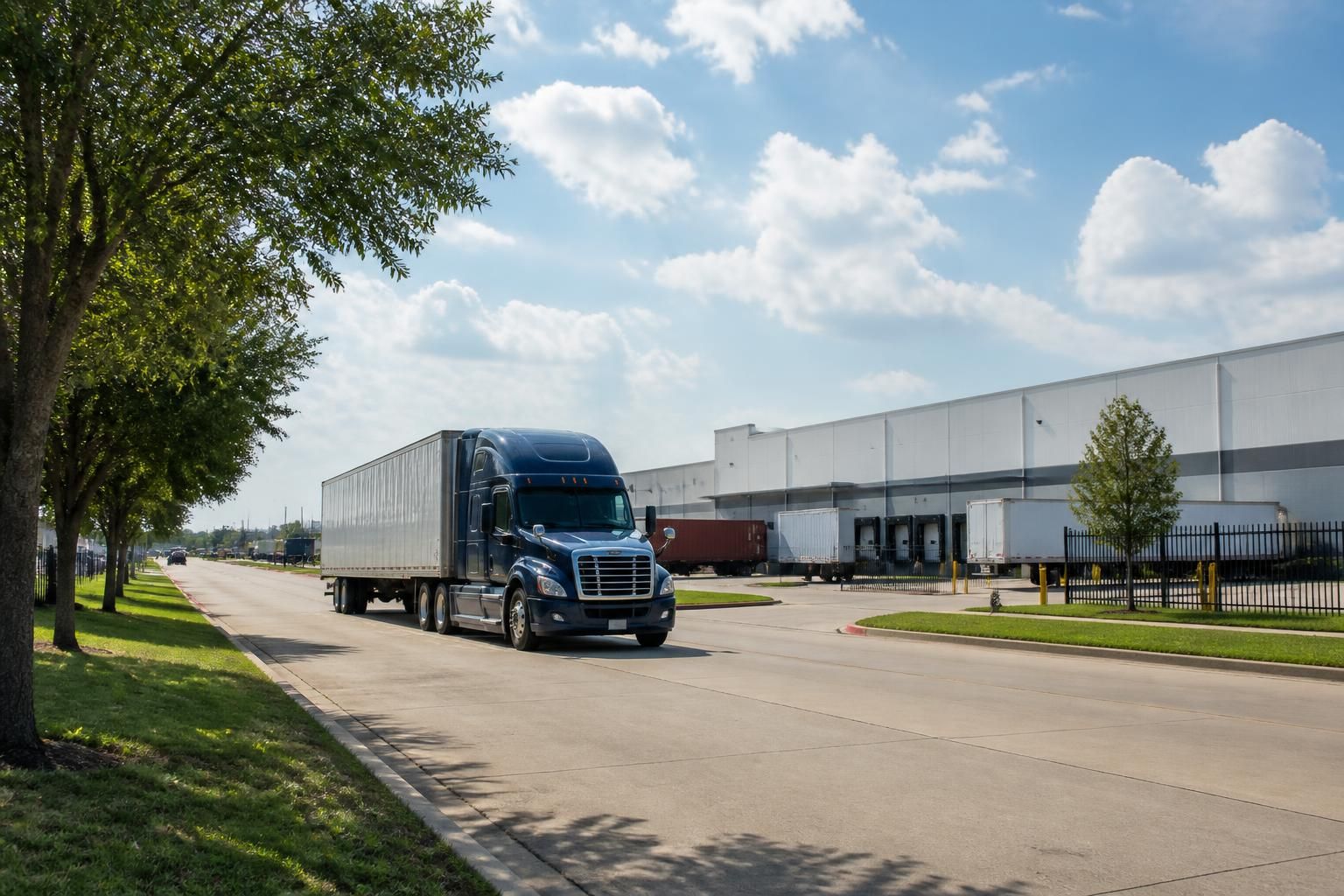
DFW Mobile Truck Repair brings mobile diesel and trailer repair support to Hutchins, TX for commercial trucks that stop moving because a breakdown changed the day’s plan. When a truck will not start, loses power, sets fault codes, leaks air, overheats, or shakes at the wheel end, we can come to the truck, assess the failure, and begin diagnosis where the unit is parked or disabled.
We work around truck stops, warehouses, distribution centers, fleet yards, loading docks, and roadside pull-offs near the Hutchins freight corridor. The next step is simple: share the truck’s symptoms, location, and any dash warnings so we can decide what can be tested on site and what repair path makes the most sense.
Hutchins sees steady commercial traffic tied to Dallas logistics movement, so breakdowns often affect tractors, semi-trucks, box trucks, reefers, flatbeds, and trailers that need to stay productive. DFW Mobile Truck Repair responds with a mobile setup built around diagnosis first, then repair options. That approach helps reduce towing and downtime when the issue can be verified and corrected where the unit sits.
We frequently support units operating through the Dallas side of the Metroplex, including traffic moving across I-45, US-75, I-20, I-30, I-635/LBJ Freeway, and nearby freight routes that connect to warehouses and fleet yards. If the truck is at a dock, yard, or roadside location, we can evaluate the failure and determine whether the repair belongs on site or at a shop.
Every breakdown starts with the same chain: truck experiences a fault, the fault creates symptoms, symptoms point to a diagnosis, and diagnosis determines repair. That can mean reviewing operator notes, checking active and stored DTCs, looking at ECM/ECU data, inspecting wiring harnesses, testing batteries, and comparing live values from the scan tool to what the engine or chassis should be doing.
We work on Freightliner, Peterbilt, Kenworth, International, Mack, Volvo, and Western Star tractors along with commercial trailers and fleet vehicles. We also service diesel systems built around Cummins, Detroit Diesel, and PACCAR powertrains, where fuel delivery, air management, emissions, or electrical faults can stop a unit from returning to work.
Good truck repair starts with controlled testing. We do not guess at parts. Instead, we use roadside-appropriate diagnostic steps such as OEM diagnostic software when available, scan tool checks, multimeter testing, pressure testing, electrical load testing, voltage drop testing, and visual inspection of related components. That is how a no-start, derate, overheating complaint, or air system fault gets narrowed down safely.
We confirm where the truck or trailer is parked so the repair plan matches the site, whether that is a yard, warehouse, dock, or roadside position.
We look for hazards tied to air leaks, hot components, tire damage, coolant loss, or a trailer that cannot be safely moved.
We ask what changed first, such as loss of power, warning lights, poor shifting, brake issues, or repeated regeneration problems.
We verify power, grounds, CAN bus communication, SAE J1939 data, sensor readings, fuel pressure, compression, and circuit integrity before recommending repair.
That process helps separate a failed sensor from a wiring issue, a bad alternator from a battery concern, or an overheating complaint caused by a thermostat, water pump, fan clutch, radiator restriction, or coolant leak.
Our Hutchins service work covers the systems that keep commercial equipment moving safely and efficiently. If the problem is electrical, mechanical, emissions-related, or chassis-based, we can test the related system and repair what has failed when the repair is suitable for field work.
Diesel engine diagnostics often focus on ECM/ECU communication, DTCs, injector performance, turbocharger response, starter draw, alternator output, battery condition, and fuel delivery. For emissions faults, we inspect DPF, DOC, SCR, DEF quality and delivery, NOx sensor readings, EGT sensor values, differential-pressure sensor data, and regeneration status. When needed, we can evaluate forced regen requirements and derate causes.
Truck brake and air system repair may include compressor output, dryer condition, reservoir pressure, brake chamber operation, slack adjusters, S-cam wear, air lines, and ABS faults. Chassis work can also involve suspension issues, air springs, leaf springs, kingpins, axle alignment concerns, and wheel-end problems such as hub, bearing, seal, spindle, or tire-related damage.
Mobile trailer repair covers landing gear, doors, lighting, ABS, axles, suspension, and structural repair, including welding when the failure is appropriate for mobile service. For reefers and dry vans, we look at the condition of the trailer’s running gear and electrical connections so the unit can go back into freight service with less disruption.
Hutchins properties that handle freight movement often need repair help where tractors and trailers actually work, not just where they were parked last night. That can mean a fleet yard with multiple units staged close together, a distribution center with a trailer that will not release from the dock, or a roadside stop where a driver needs a clear diagnosis before deciding on a tow.
Mobile repair is especially useful when a unit cannot be easily moved because of air loss, overheating, electrical failure, tire damage, or a transmission and drivetrain issue that leaves it stranded. By traveling to the truck stop, warehouse, or loading dock, we can inspect the problem where it happened and decide whether a field repair is practical.
Useful for preventive checks, repeat fault tracing, and units that need quick return-to-service testing.
Helpful when tractors, dry vans, or reefers need trailer-side or connector-side troubleshooting without repositioning the whole rig.
Appropriate for safe diagnosis of no-starts, air leaks, brake warnings, tire failures, and overheating complaints.
Hutchins customers can request the same commercial repair services we use across the DFW Metroplex, including:
If the issue is a failed battery, a wiring harness fault, a coolant loss problem, a compressor concern, or a trailer lighting problem, we can discuss the likely test path before dispatching to the site.
When you call DFW Mobile Truck Repair, the goal is to move from symptoms to diagnosis without wasting time on parts swapping. We may start with dash codes, driver observations, and a quick visual inspection. From there, testing can confirm whether the issue sits in the engine, aftertreatment, electrical, cooling, air brake, or wheel-end system. If the unit can be repaired on site, we will outline the work needed. If not, we will explain why the failure calls for a different repair setting.
That process is especially helpful for North Texas operations where heat load, heavy freight cycles, and frequent stop-and-go duty can magnify cooling-system stress, tire pressure changes, and electrical strain. The point is to get the truck or trailer back to service with the right repair path, not a rushed guess.
Yes. We can test batteries, starter circuits, alternator output, grounds, and related wiring to narrow down a no-start condition on site.
Yes. Trailer electrical problems, ABS issues, and lighting failures are part of mobile trailer repair when the problem can be accessed at the parked unit.
Yes. Derate complaints often involve emissions sensors, DEF delivery, DPF loading, or ECM communication, and those systems can be checked with the right scan data.
Yes. We work on tractors, semi-trucks, box and straight trucks, reefers, dry vans, flatbeds, and commercial trailers.
We can inspect coolant level, radiator condition, thermostat behavior, water pump performance, fan clutch operation, and signs of pressure loss or overheating.
Yes. We regularly support fleet yards, warehouses, loading docks, and other commercial sites around Hutchins where mobile repair makes more sense than moving a disabled unit first.
For Hutchins, TX truck and trailer service, DFW Mobile Truck Repair is ready to bring the diagnosis to the vehicle and help you decide the next repair step.

Mobile diesel troubleshooting and repair for Dallas trucks, trailers, and fleets at the jobsite.
Learn More
Mobile trailer repair keeps Dallas freight moving with field diagnosis and on-site fixes.
Learn More
Roadside truck breakdowns get diagnosed fast, repaired smart, and returned to work with less downtime.
Learn More
Mobile diesel diagnostics and repair for Dallas trucks, fleets, trailers, and roadside breakdowns.
Learn More
Mobile brake and air-system diagnostics for commercial trucks, trailers, and fleets across Dallas.
Learn More
Dallas mobile diesel emissions repair for derates, fault codes, regen problems, and DEF system faults.
Learn More
Mobile diagnostics for truck electrical faults, wiring damage, starting failures, and charging problems.
Learn More
Suspension noise, axle play, or wheel-end heat need fast diagnostics before a breakdown grows.
Learn More
Mobile cooling-system diagnosis and overheating repair for commercial trucks across Dallas and the Metroplex.
Learn More
Mobile transmission, clutch, and drivetrain repair for Dallas commercial trucks that need a precise diagnosis.
Learn More
Mobile truck tire repair that gets Dallas commercial trucks inspected, serviced, and back to work.
Learn More
Scheduled mobile fleet service that cuts downtime, catches wear early, and keeps trucks moving.
Learn More
Request Mobile Service
Tell us the truck, trailer, symptom, and location, and we will help determine the safest next step. We support roadside breakdowns, fleet maintenance stops, and field repairs when a mobile fix is the right solution.